The Arts Society Falmouth
Our 2026-2027 Lecture Programme
Lectures begin at 10.30 a.m. at the Princess Pavilion, normally on the second Friday of the month. Refreshments are available in the Garden Room from 10.00 a.m. Lunches are available post lecture.
Below is a list of lectures and a brief synopsis of each. You can download a Printable Copy of the lecture programme.
Future Lectures
13
November
2026
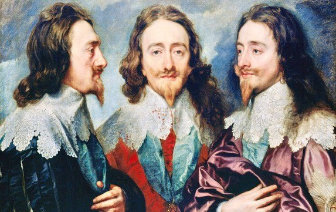
SIR ANTHONY VAN DYCK: PRINCE OF PAINTERS
Adam Busiakiewicz
Few painters can claim greater influence over the development of British Art than Van Dyck. His fluid and colourful Baroque style, inspired by a love of Venetian painters such as Titian, eradicated the stiff painting of Elizabethan and Jacobean England.
Apart from transforming British portraiture, his exuberant mythological and religious works matched, and at times even outstripped, those achieved by his master, Rubens.
11
December
2026
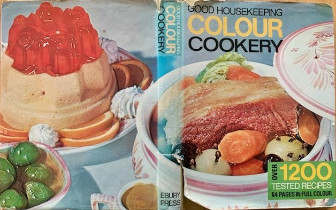
FROM THE SAXONS TO MARY BERRY: A VISUAL HISTORY OF THE ENGLISH COOKBOOK
Peter Ross
Across a thousand years of manuscripts and over five hundred years of publishing, English recipe books have reflected the eating habits of Kings and courtiers, the merchant classes, inn-keepers and restaurant owners, as well as home cooks and even the paupers who visited the soup kitchens of Victorian London.
Cookbooks are full of extraordinary food but also extraordinary illustrations from medieval illuminated manuscripts, via the engravings of the eighteenth century and the colour lithographs of Mrs. Beeton, to the high-end life-style images of the modern TV cook.
12
February
2027
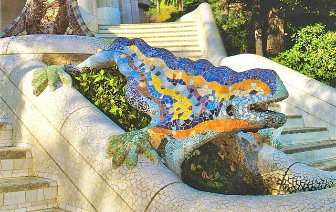
ANTONI GAUDI: MASTER BUILDER OF BARCELONA
Viv Lawes
Genius Spanish architect and designer Antoni Gaudí (1852-1926), a key figure in Catalan Modernism, stands as one of the creators of Barcelona’s urban identity. Inventor of new techniques and a magpie enthusiast of all things botanical and sacred, Gaudí’s most famous building, the Barcelona Church of the Sagrada Família, is Spain’s most-visited monument and one of seven of the architect’s works listed by UNESCO as a World Heritage site.
Building works on Sagrada Família were begun in 1882 (when Gaudi was only 30) and are still ongoing, a fact that stands in stark contrast to contemporary building projects and brings to life the nature of cathedral building in medieval Europe.
12
March
2027
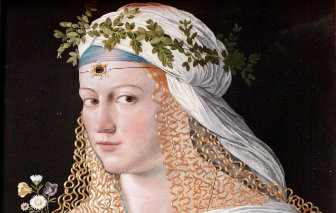
THE BORGIAS, THE MOST INFAMOUS FAMILY IN HISTORY?
Sarah Dunant
Murder, poison, corruption and incest: all perfect ingredients for sensational popular culture. But in an age known for its brutality and church corruption were the Borgias really so bad?
The charismatic figure of Pope Alexander VI, living inside his sumptuously decorated apartments, the career of his son, Cesare, cardinal, general, employer of Da Vinci and the model for Machiavelli’s The Prince, and the journey of Lucrezia Borgia from “the greatest whore in Rome” to a devout and treasured duchess of the city of Ferrara. Sometimes truth is more intoxicating than myth.
9
April
2027
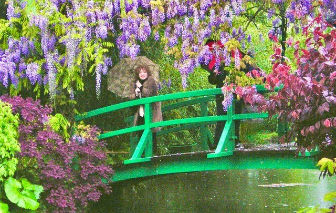
MONET AND OTHER IMPRESSIONISTS AS GARDENERS AND PAINTERS OF GARDENS
Martin Heard
Claude Monet once said that his only two interests in life were painting and gardening. In cultivating his garden at Giverny in Normandy (famous for the water lilies series of paintings) from the mid 1880s, he felt he had created “his most beautiful work of art”.
Monet’s love for gardening began much earlier in the 1860s and was shared by his artist friends and fellow Impressionists, Frédéric Bazille, Auguste Renoir, Camille Pissarro, and, in particular, Gustave Caillebotte.
For the Impressionists, gardens with new and unusual varieties of flowers and shrubs provided the artists with exciting juxtapositions of colour combined with the variations of outdoor light effects. The paintings often give us an intimate view of how their private and working lives interacted.
14
May
2027
THE WORLD’S MOST EXPENSIVE ART - WHERE LEONARDO MEETS PICASSO
Ian Swankie
In the last few years the top end of the art market has flourished, and collectors have been prepared to pay astonishing amounts to own a modern masterpiece.
This lecture is about the works that have sold for over $100 million and is an excuse to examine some beautiful and varied art. These artworks would not achieve such sky-high prices if they were no good.
So, we’ll see some wonderful paintings including those by Picasso, Cézanne, Leonardo, Rembrandt, Modigliani, Klimt, Bacon and Pollock, all held together by the common thread of their extraordinary commercial value.
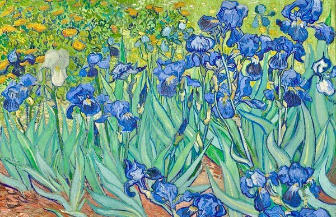
Details on Google Art Project, Irises-Vincent van Gogh, Cropped, CC0 1.0
11
June
2027
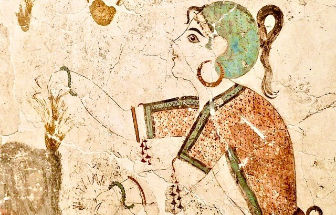
BRONZE AGE FRESCOES FROM SANTORINI: THE ART OF ATLANTIS?
Dr Stephen Kershaw
Inspired by Steve's appearance as an expert contributor in a Channel 5 TV documentary about ruined ancient cities, “The Bronze Age Frescoes from Santorini: The Art of Atlantis?” indulges in a sumptuously illustrated look at some outstanding ancient Greek artworks, and the intriguing possibilities of interpretation that they have produced.
In around 1625 BCE the thriving harbour town of Akrotiri on the island of Santorini was overwhelmed in a cataclysmic volcanic eruption that both destroyed and preserved the one of the most wondrous sets of frescoes to emerge from the ancient world.
Now beautifully restored, they give us some extraordinary insights into the style, composition, and techniques of manufacture of their incredibly gifted artists, as well as remarkable visions of the ships, architecture, dress, jewellery, and natural environment of the islanders of Bronze Age Santorini.
9
July
2027
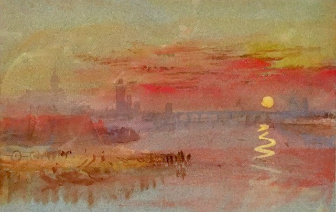
TURNER vs CONSTABLE: THE GREAT BRITISH PAINT OFF
Nicola Moorby
This is the story of the epic rivalry between the two giants of British art, J.M.W. Turner and John Constable. As unlike in background and temperament as their paintings were in style, these two creative geniuses transformed the art of landscape.
This lecture sets them head-to-head and examines their differences, their similarities, their battles and their shared triumphs. But who will ultimately be crowned star painter?
Previous Lectures this year
11
September
2026
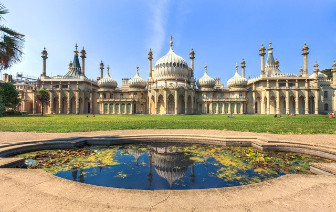
THE ROYAL PAVILION BRIGHTON
Patrick Conner
How could such an extraordinary and outlandish creation have been built in England?
The answers lie partly in the 18th-century fashion for chinoiserie, partly in the travels of British artists to India and China, and partly in the extravert personality of the Prince Regent - later King George IV.
As a royal residence the Pavilion enjoyed musical evenings, lavish banquets and high-tech kitchens. In 1850 it faced destruction but was rescued by the townspeople of Brighton; in 1914-16 it was used as an Indian military hospital; in 1975 it survived an arson attack. Since then it has been restored to the magnificently exotic palace that we see today.
16
October
2026
THE DRAWINGS OF W. BARNS-GRAHAM CBE (1912 – 2004) FORM, LINE AND LANDSCAPE FROM ST. IVES TO LANZAROTE
Cath Wallace
This lecture traces the importance of drawing throughout the career of this important British painter who was born in Scotland but lived much of her adult life in St. Ives, Cornwall. Wilhelmina Barns-Graham is known as a painter of abstract work and part of the Modernist group of artists in St. Ives. Throughout her life she practiced the discipline of drawing which she used to inform her paintings and to explore different ideas. These drawings are important works in their own right and in this lecture Catherine Wallace highlights some of the main themes that reflect Barns- Graham’s journey through life.
From her figure studies at Art School in Edinburgh in the 1930s, her drawings of the camouflage factory where she worked in St. Ives during World War II; her constructivist drawings of glaciers in Switzerland in the late 1940s; her landscapes of Italy in the mid 50s ; the line drawings and rhythmic patterns she made back in St. Ives in the 1970s; the accurate line drawings of buildings in St. Ives and Stromness, Orkney in the 1980s to some of her most dynamic drawings of volcanic rock on the island of Lanzarote in the 1990s.
Barns-Graham always experimented with different medium to use in her art and that included her drawings, this lecture looks at the wide variety of techniques and medium she used so effectively in her graphic works.

_-_Google_Art_Project.jpg)


